Executive Doctoral Research · École des Ponts Business School

Doctoral
Research

Anticipating technological disruption. Rethinking business models. Preparing the future of public enterprises.

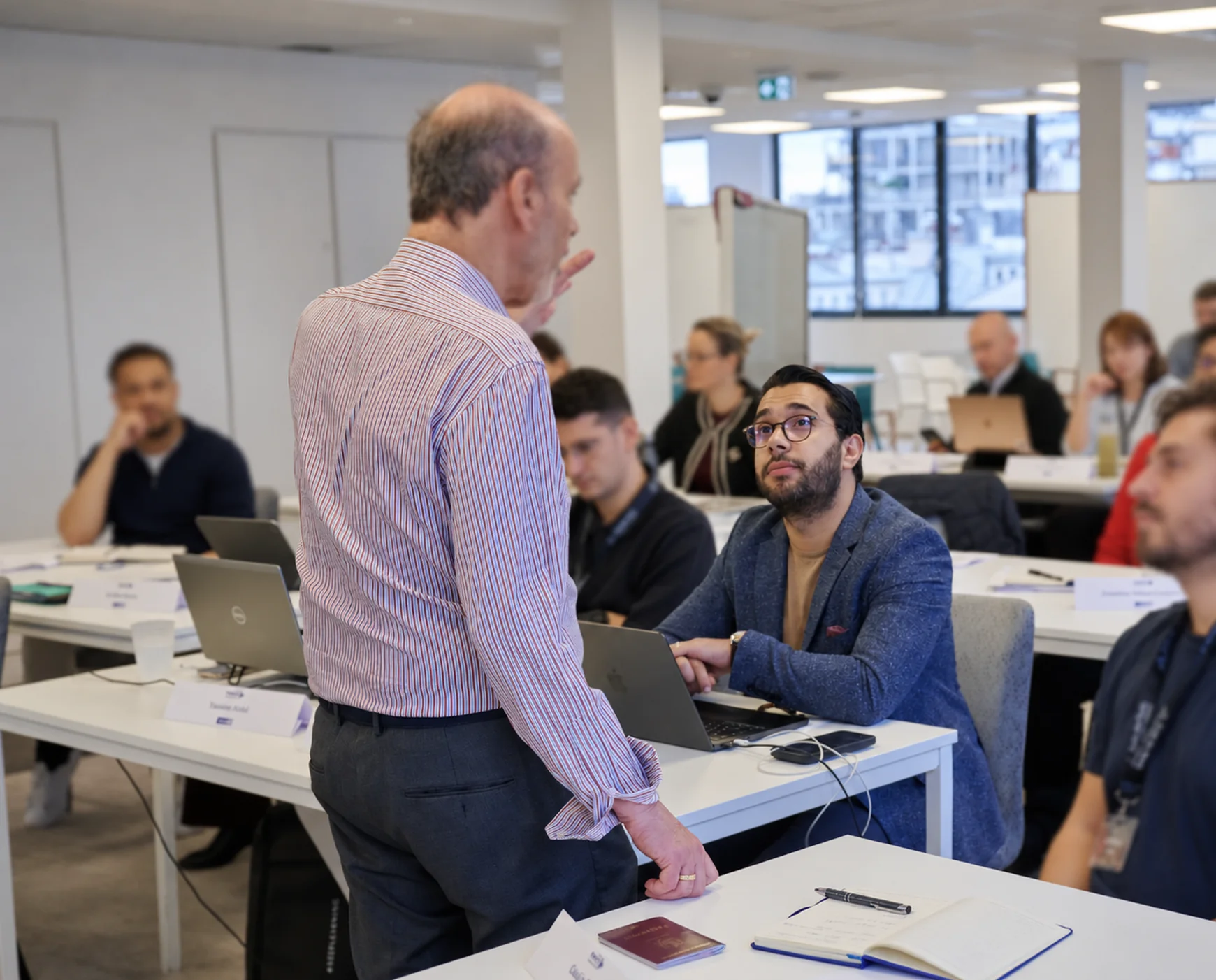
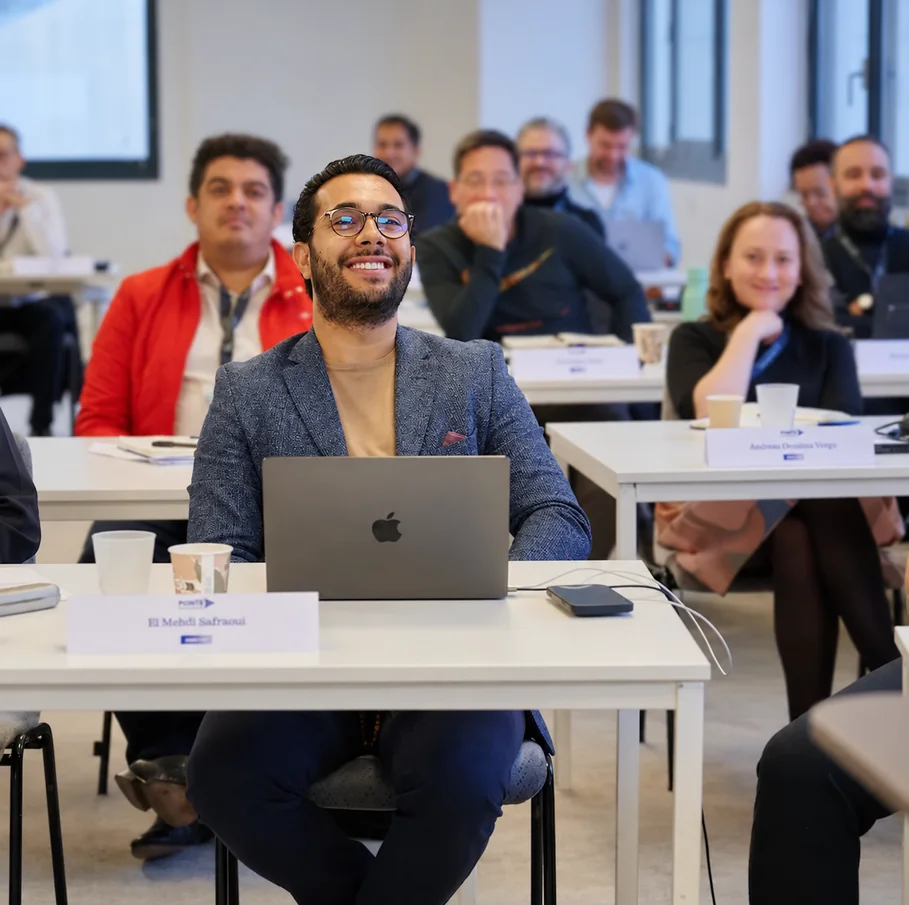
El Mehdi Safraoui during an École des Ponts Business School session

01 / The starting point

What if we could anticipate change before it becomes inevitable?

Early signalsStrategic decisionsCapacity to act

Major transformations rarely begin with a dramatic event.

They often emerge quietly, through new technologies, shifting behaviours, changing expectations, and early signals whose significance is not immediately understood.

Meanwhile, organisations continue to operate. They invest, plan, and make decisions around models that may have served them successfully for decades.

Until something changes.

What once appeared distant becomes an immediate priority. Established advantages can turn into constraints. And choices that could have been explored over time suddenly become urgent decisions.

It is this critical space, between the first signals of change and the moment change becomes unavoidable, that I want to understand.

How can organisations recognise what is emerging? How can they translate that understanding into better strategic decisions? And how can they prepare for transformation before circumstances leave them little choice?

These questions are at the heart of my doctoral research journey.

02 / From practice

Where the question comes from

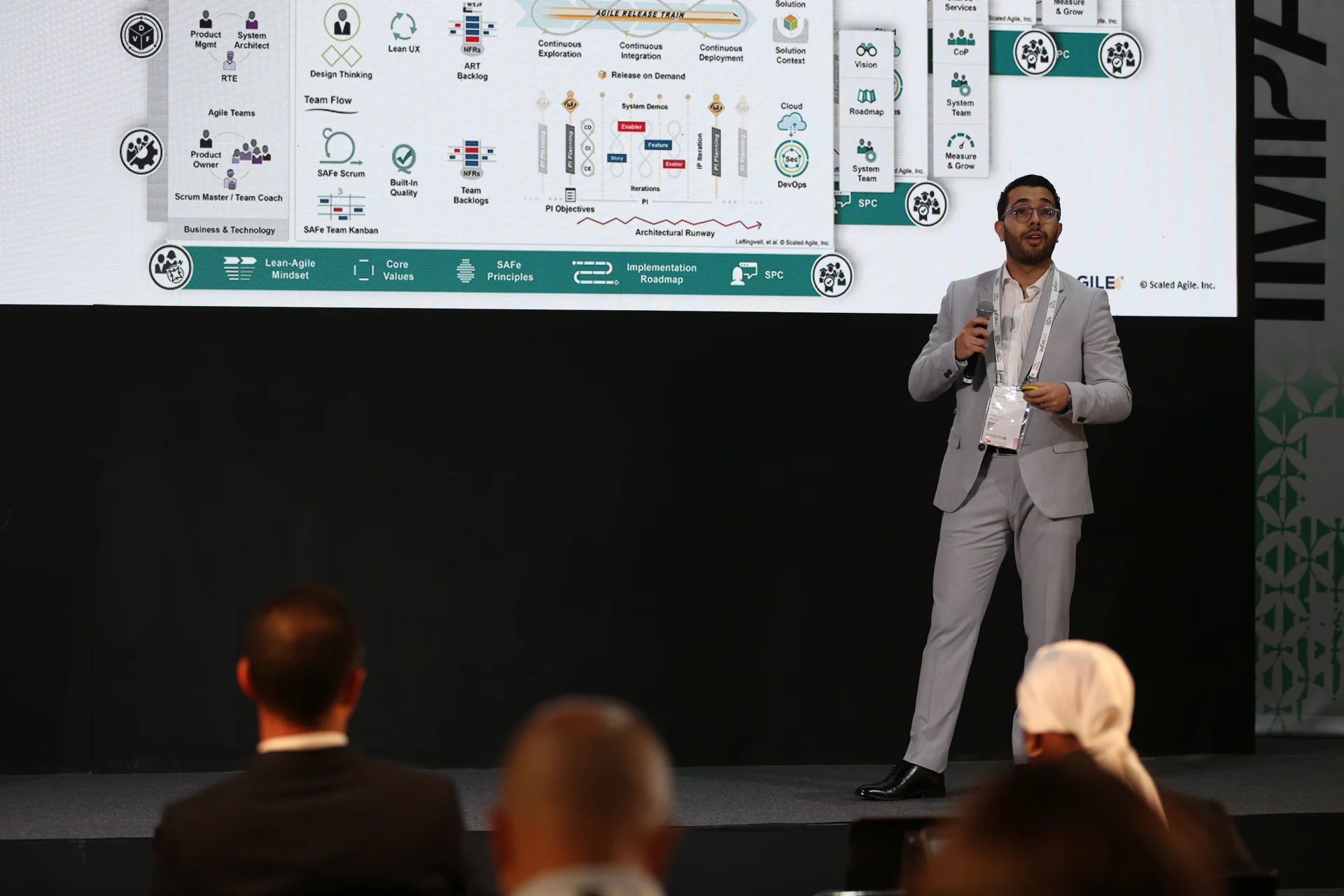
El Mehdi Safraoui speaking at GITEX Africa

My interest in this subject did not begin in an academic setting. It emerged through professional experience.

Working on technological and organisational transformation initiatives, including with public organisations, exposed me to a recurring reality: the hardest challenges are not necessarily technological.

They concern how organisations interpret change, challenge established assumptions, make difficult choices, and develop the capabilities required to move forward.

Over time, I came to recognise an important distinction:

Having a transformation strategy is not the same as being prepared for the transformations ahead.

An organisation may invest in innovation while remaining deeply attached to its existing business model. It may articulate an ambitious vision without developing the mechanisms required to anticipate the disruptions that could challenge it.

This observation gradually became a deeper question: how can organisations make anticipation an enduring capability rather than an occasional strategic exercise?

Pursuing this question with greater depth and intellectual rigour is what led me towards doctoral research.

03 / Public enterprises

Why public enterprises?

Public enterprises occupy a distinctive position in our economies and societies.

They operate in essential sectors, carry long-term responsibilities, and make decisions that can influence infrastructure, public services, economic development, and the lives of future generations.

Their transformation presents a particular challenge.

They must reconcile public service obligations, economic sustainability, evolving expectations, institutional priorities, and technological change.

Yet technological disruption can challenge far more than operational processes.

It can reshape how services are delivered, alter value chains, create new expectations, and call into question the foundations of established business models.

When a public enterprise rethinks its future, the implications may extend well beyond the organisation itself.

This is what makes the subject particularly meaningful to me.

I want to explore how these institutions can preserve their essential missions while building the capacity to anticipate, innovate, and reinvent themselves.

04 / The question

The question driving my research

My current thinking is guided by one overarching question:

How can public enterprises anticipate technological disruption and translate foresight into strategic decisions, business model renewal, and sustainable organisational transformation capabilities?

This is the current direction of my doctoral project, with its scientific scope and formal research questions still being refined.

Three interconnected areas shape the enquiry.

01 — Anticipating: looking beyond the immediate horizon

How can organisations recognise emerging signals, explore alternative futures, and bring these perspectives into strategic decision-making?

Strategic foresight offers approaches to questioning assumptions, examining emerging trends, and considering futures that may challenge today’s prevailing logic.

My interest extends beyond the techniques themselves. I want to understand what enables foresight to become part of an organisation’s governance, culture, and everyday decision-making.

02 — Rethinking: challenging business models before circumstances demand it

Technological disruption does not simply change how a service is delivered. It may redefine user expectations, sources of value, economic assumptions, and even an organisation’s role.

How can leaders recognise these shifts early enough to make meaningful choices? What strategic alternatives might they consider? How can they balance innovation, economic sustainability, and public service responsibilities?

I want to explore how public enterprises can approach business model transformation as a deliberate strategic choice rather than a response to external pressure.

03 — Transforming: building the capacity to act

Anticipation alone does not create transformation.

Even the most compelling strategy will struggle if an organisation lacks the leadership, culture, alignment, and capabilities required to turn decisions into action.

This dimension of my research explores what makes organisations ready for change: how leaders mobilise people, address resistance, develop organisational capabilities, and make transformation sustainable over time.

Anticipate. Decide. Transform. Three connected challenges, and one fundamental ambition: helping organisations become better prepared for an uncertain future.

05 / International outlook

Rooted in France and Morocco. Open to the world.

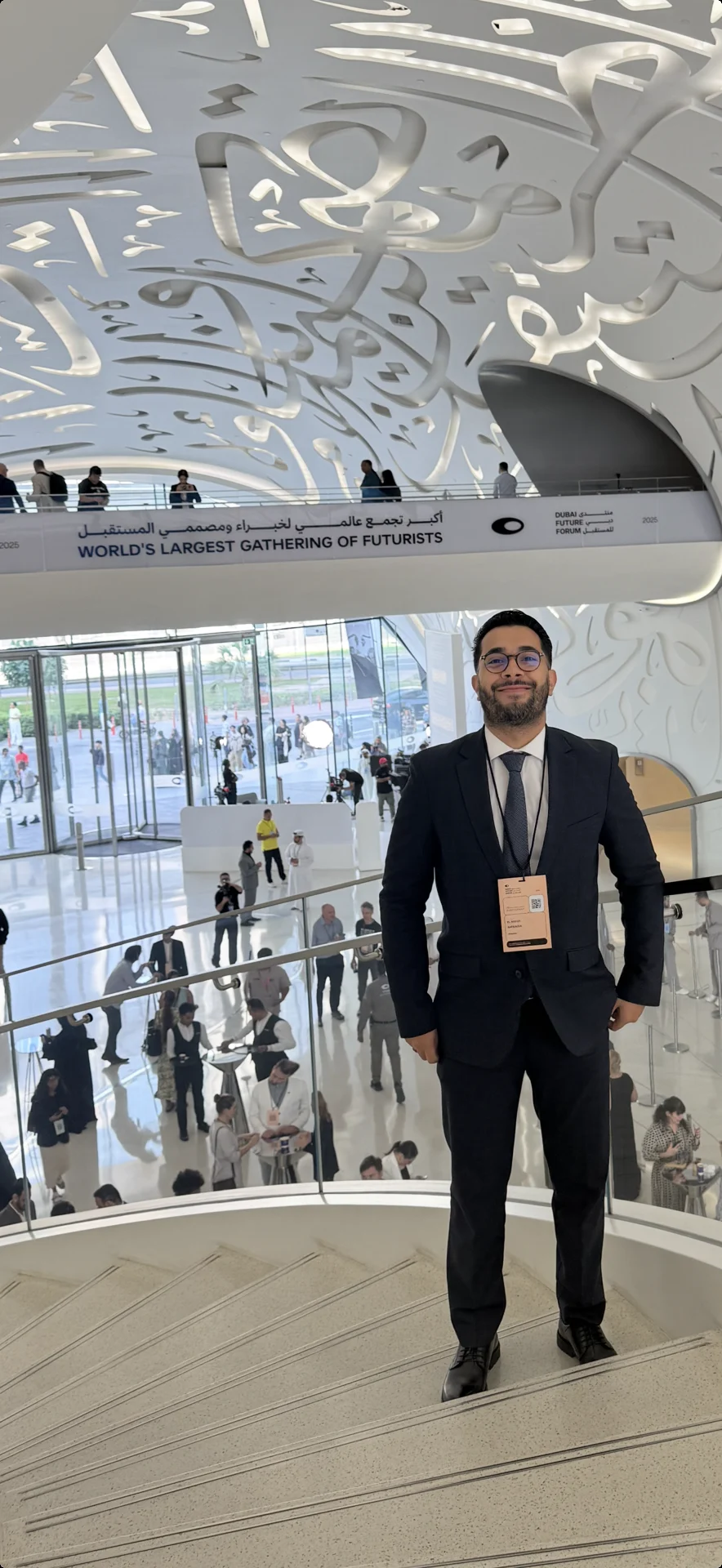
El Mehdi Safraoui at an event focused on the future

The transformation of public enterprises cannot be understood independently of the institutional, economic, and cultural environments in which they operate.

That is why I want to approach this subject through a perspective that extends beyond any single country.

My professional journey and experiences naturally draw my attention towards France and Morocco. These two contexts offer an opportunity to explore different approaches to strategic foresight, governance, and the transformation of public enterprises.

Yet my curiosity extends much further.

I am equally interested in learning from experiences in the United Arab Emirates, Singapore, Hong Kong, and Japan, where the relationships between public institutions, long-term strategies, innovation, and economic development raise questions I would like to explore more deeply.

My intention is not to search for a universal model or assume that institutions operating in very different environments can be compared directly.

It is to broaden the conversation, challenge familiar perspectives, and learn how different institutions approach a shared challenge: preparing today for transformations that may redefine their missions tomorrow.

I see this international openness as an opportunity to connect with researchers, leaders, and institutions, exchange experiences, and enrich my understanding of the different ways organisations prepare for the future.
06 / Doctoral journey

Why pursue doctoral research?

After years of working alongside organisations navigating change, I wanted to create space for deeper enquiry.

Not to distance myself from practice, but to understand it more profoundly.

Professional experience develops intuition and conviction. Research invites us to challenge those intuitions, question our assumptions, engage with existing knowledge, and examine what the evidence actually tells us.

This is why I chose to pursue an Executive Doctorate in Business Administration (E-DBA) at École des Ponts Business School.

I see this journey as an opportunity to connect three worlds that do not always interact closely enough: academic research, strategic leadership, and the realities of organisational transformation.

My intention is not simply to study change, but to contribute knowledge that can inform the way leaders understand and approach it.

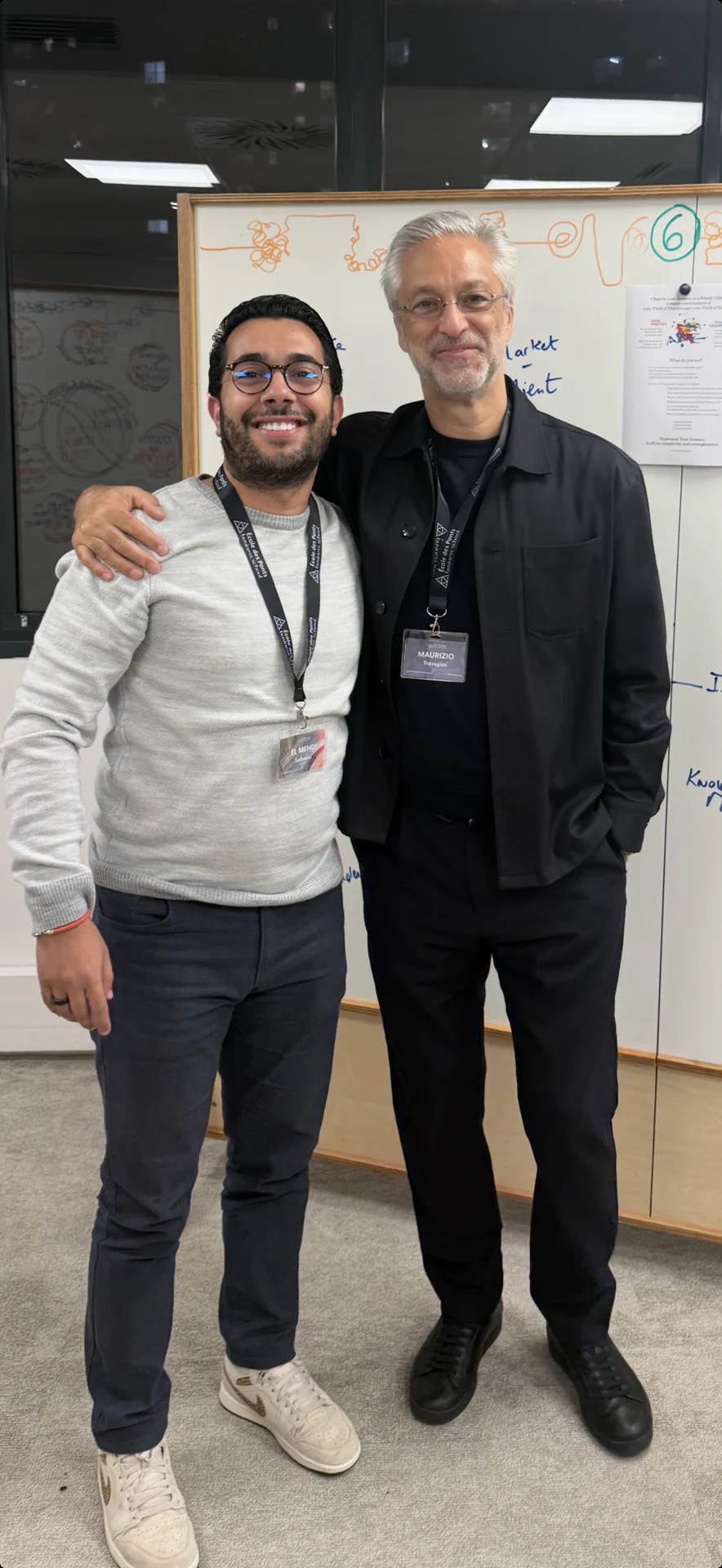
El Mehdi Safraoui during an exchange in a shared learning space

07 / Contribution

From research to practical contribution

El Mehdi Safraoui in class at École des Ponts Business School

Ultimately, I hope this work will contribute to a more informed conversation about how public enterprises prepare for technological disruption.

How can boards and executive teams bring alternative futures into strategic discussions? How can they recognise when established business models need to be reconsidered? How can they develop the organisational conditions required to move from intention to implementation?

As the research progresses, my ambition is to generate insights that may inform strategic reflection, decision-making approaches, and learning experiences for leaders and organisations.

Beyond any single geographical context, I hope to encourage a broader dialogue about the role of strategic foresight in public enterprise governance and transformation.

Making anticipation not merely an occasional response to uncertainty, but a lasting organisational capability that informs decisions and action.

08 / An invitation

An open invitation to connect and contribute

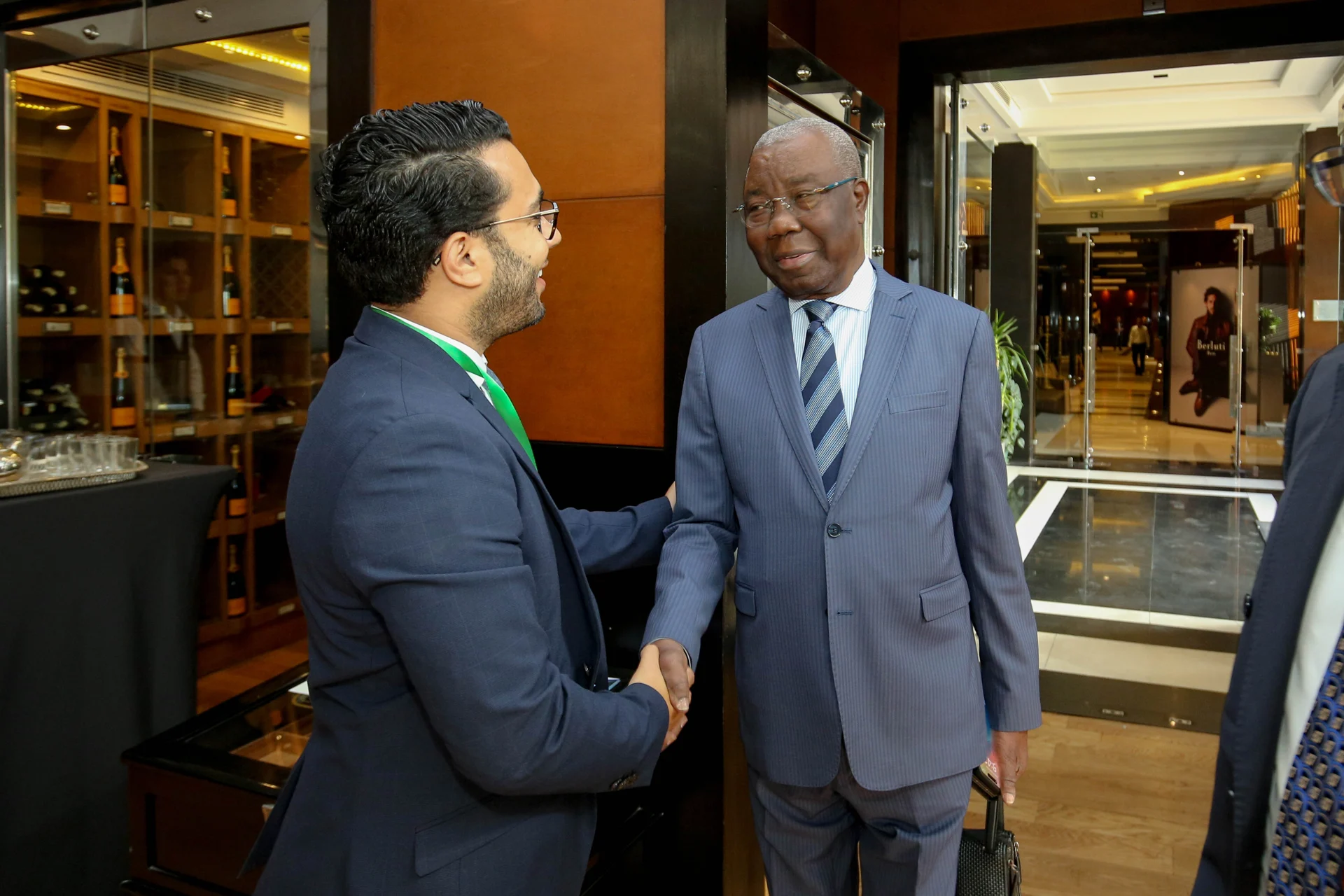
El Mehdi Safraoui shaking hands during a professional event

I believe meaningful research benefits from dialogue with the people and institutions experiencing the challenges it seeks to understand.

This project is therefore also an invitation to connect.

With public enterprise leaders willing to share their perspectives, experiences, and strategic questions.

With researchers and academic institutions across France, Morocco, and the wider international community exploring foresight, technological disruption, governance, and organisational change.

And with organisations, foundations, and potential partners interested in supporting independent, practice-oriented research that can contribute to better decisions about the future.

Contributions may take different forms, from knowledge exchange and access to relevant organisational contexts to research partnerships or support, subject to academic and ethical requirements.

Beyond the doctoral project itself, I hope to encourage a broader conversation about how institutions can strengthen their ability to shape the futures they serve.

The future of public enterprises will not be determined solely by the disruptions they face, but also by the decisions they make to prepare for them.
Let’s connect and explore opportunities for collaboration

Privacy

Your name, email address, organisation, subject and message are sent through the website’s hosting mail service to contact@elmehdisafraoui.com to handle your request and reply.

Your language choice is remembered in this browser. External websites apply their own privacy policies.

FormSubmit — privacy policy

Audience measurement

With your consent, Google Analytics 4 measures page visits and interactions. No advertising tracking is enabled. The site does not send contact-form field values to Analytics. You can refuse measurement or withdraw consent using “Cookies” in the footer. Your choice is stored on this device for six months. Refusing does not prevent you from using the site.

Google privacy policy

Spam prevention

Google reCAPTCHA v3 is loaded when you send the form to assess whether the interaction is automated. Its token is verified on the server before your message is sent through this website’s hosting mail service. This security check is separate from optional Analytics consent.